

UME
Electrodynamics Laboratory
About Us
Electrodynamics Laboratory consists of two sub-laboratories, Kibble Balance and Plasma.
Fields of Activity
The Electrodynamics Laboratory is developing the national kilogram standard in the Kibble Balance sub-laboratory. In addition, the development of Kibble balancing devices with a measurement capacity of up to 10 grams with high commercial potential is being carried out.
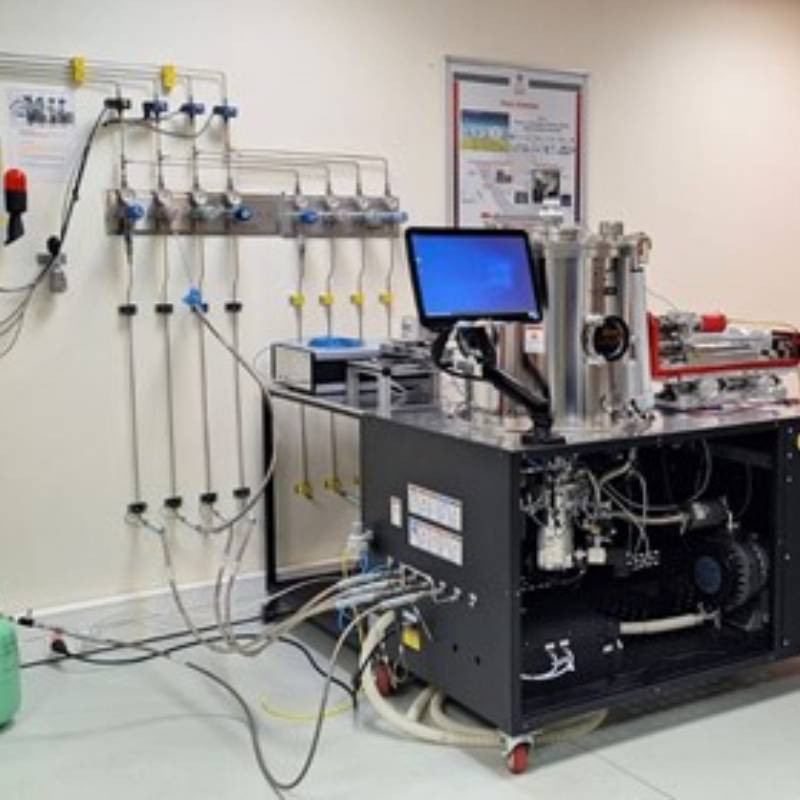
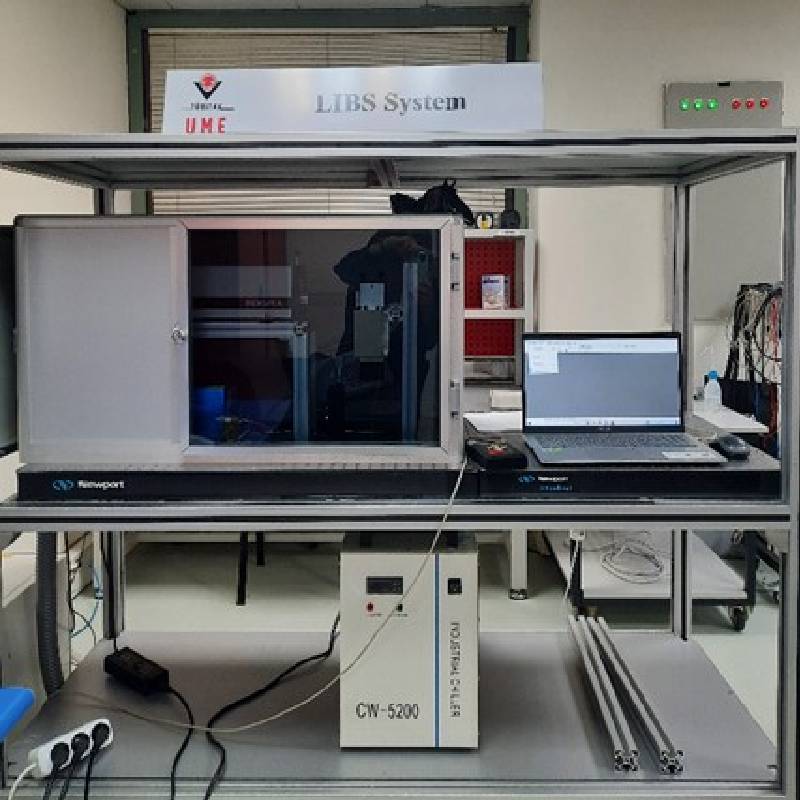
Electrodynamics Laboratory, Plasma sub-laboratory develops plasma diagnostic techniques, innovative plasma technologies and machine learning based plasma spectroscopy (LIBS, laser induced breackdown spectroscopy).
Kibbe Balance Laboratory
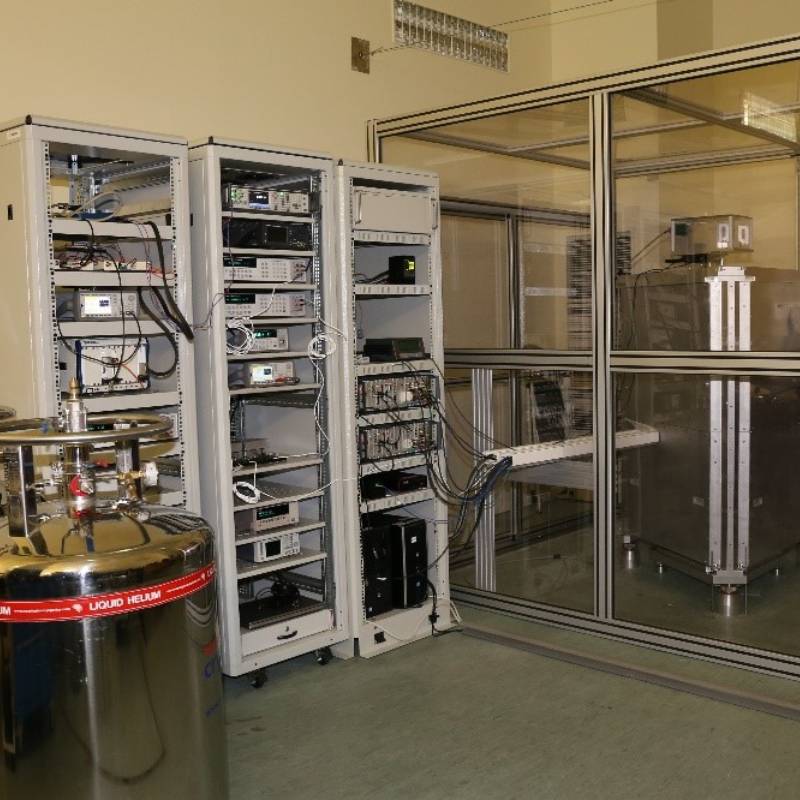
The Kibble Balance Laboratory was established to establish the "National Kilogram Prototype", to integrate it into the international metrology system through international comparisons and to ensure mass measurement unity by providing primary level mass calibration services.
As of May 20, 2019, a new definition of the kilogram, one of the basic units of the International System of Units (SI), is expected to be in effect. With the redefinition of the unit, the current dependence on the physical object in the definition and realization of the kilogram will be removed and the kilogram will be associated with Planck's constant (h), the fundamental constant of quantum physics. With this new definition, which guarantees the long-term stability of the mass scale, the kilogram will be realized independently of time, location and person.
Today, there are two independent primary methods, officially accepted by the Consultative Committee on Mass and Related Measures (CCM), that have been developed to achieve the new definition of the kilogram unit with the highest accuracy and lowest uncertainties:
- Kibble (Watt) Balance Experiment
- X-Ray Crystal Density (XRCD) Experiment
Kibble balancing experimental setups based on the principle of balancing mechanical and electrical power can be designed with different geometries and experimental protocols. Kibble Balancing Laboratory contributes to the studies carried out worldwide with the Oscillating Magnet Kibble Balancing Experimental setup established within the scope of the Kibble Balancing project launched in the second half of 2014. With the oscillating magnet experimental setup, a completely new measurement concept was created by following an alternative path to the leading institutes in the field of scientific metrology and the Turkish brand of Kibble balancing experiments was developed.
At the end of the successfully completed first phase of the project 3 x 10⁻⁷ measurements were made with relative uncertainty. Although the studies were started recently, the uncertainty levels of institutes that have been working in this field for relatively longer years were reached in a short time.
In the second phase, where the "National Kilogram Prototype" will be created, 2 x 10⁻⁸ relative uncertainty level is aimed to be reached. If this target is achieved, the country will no longer be dependent on external sources for mass traceability, and TÜBİTAK UME will be in a position to provide international mass calibration services to institutes that do not have a primary method and even provide technology transfer to developing institutes.
Plasma Metrology Laboratory
The aim of the laboratory, which is in the establishment phase, is to first establish the infrastructure of plasma metrology, a new field in metrology, and then contribute to the development of plasma-related technologies. Plasma, defined as the fourth state of matter, consists of almost equal numbers of negatively charged electrons and positively charged ions. Due to its highly complex structure, plasma contains many physical processes that need to be diagnosed. The development of controlled plasma can add new dimensions to metrology and future breakthroughs. Plasma technologies are the backdrop for today's cutting-edge industry. Plasma will play a key role in the invention of modern technologies and new devices. The production of flexible nano-electronic, micro-electronic and electromechanical devices, innovative chemical applications for bio-fuel synthesis, realization of micro-batteries, surgical applications and direct plasma utilization for pharmaceuticals are some of the next generation plasma applications. Furthermore, the extraordinary properties of plasma could pave the way for the development of new measurement methods and measuring instruments in different fields of metrology. In addition, in the future, fusion is planned to be used as a green, safe, sustainable energy source, a major breakthrough to combat climate change. A better understanding of the complex nature of plasma and the characterization of its chemical, physical and electrical properties could lead to significant advances towards controlled fusion reactions.
Technical Hardware and Equipment
The list of instruments in the laboratory is shown in the table below
- Relative humidity and temperature meter
- Pressure sensor
- Digital readout unit
- Resistance thermometer
- Electronic Inclinometers
- Hene Laser
- Mass
- Laser-generated plasma spectroscopy
- Linear stage
- Particle generation and spraying system
- Piezo controller
- Piezo tip/tilt platform
- Temperature graded soldering device
- 8 1/2 digit digital multimeter
- Spectrometer System
- Standard Resistance
- Ume kibble balance test setup
- Analytical balancing system
- DC current source
- DC power supply
- Vertical linear motion system
- Handheld multimeter
- Phase-locked signal source
- Phase-locked signal source
- Comparator scales
- Laser interferometer
- Laser measuring system
- Laser sensor
- Multimeter
- Nanovoltmeter
- Plane mirror interferometer
- Plasma probe sensor
- Servo motor and servo dirver
- Spectrum Analyzer
- Vacuum pump system
- Data acquisition board and converters
- DC power supply
- DC power supply
- DC power supply
- Quantum voltage unit
- Liquid helium dewar
- Neutral earth reset reactor
- Ozone producer
- Pxi shunt and control card
- Rubidium (RB) standard
- Ultrasonic weight washer
- Waveform generator
- 24 bit pxi digitizer card
- 8 1/2 digit digital multimeter
- Standard Resistance Oil Bath
MECHANICS GROUP
Projects and Collaborations
- Internal project: First Generation UME Watt Balance Test Rig Prototype (2014-2018)
- Internal Project: National Kilogram Standard (2018 -2022)
- TARAL Project: Characterization of High Power Laser (2013-2019)
- Internal Project: Plasma Metrology and Applications
- EMPIR project: Single- and Entangled-Photon Sources for Quantum Metrology (2021-2024)
- EMP Project: Metrology of the Earth's Biosphere: Cosmic Rays, Ultraviolet Radiation and Ozone Layer Fragility (2022 -2025)
- EMP project: "Automated, Adaptive and Uncertainty Sensitive Smart Measurements Using Machine Learning" (2024-2027)
- SSB Project: Development and Application of Stress Sensor, Search Coil Magnetometer and Fluxgate Magnetometer for Early Earthquake Detection and Investigation of Building Dynamics (2025 -2029)
For more informationContact Us
Email: ume@tubitak.gov.tr
Phone: 0 (262) 679 5000