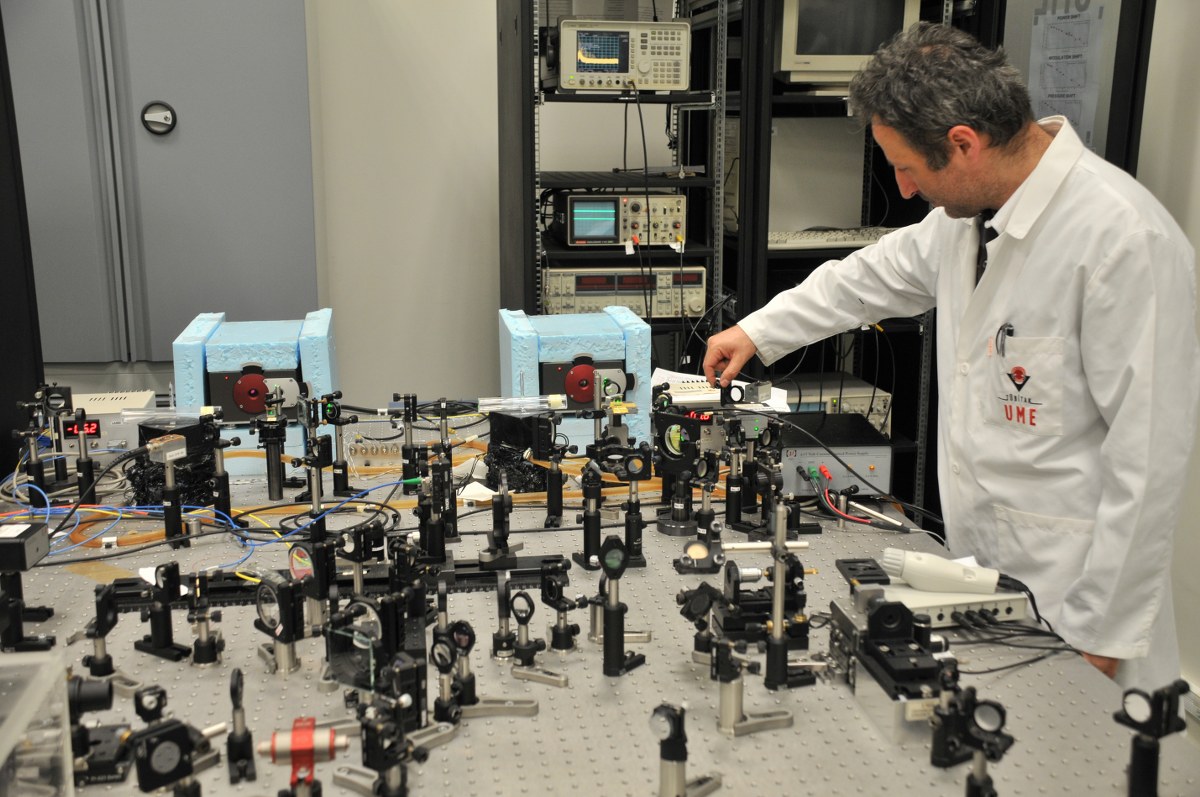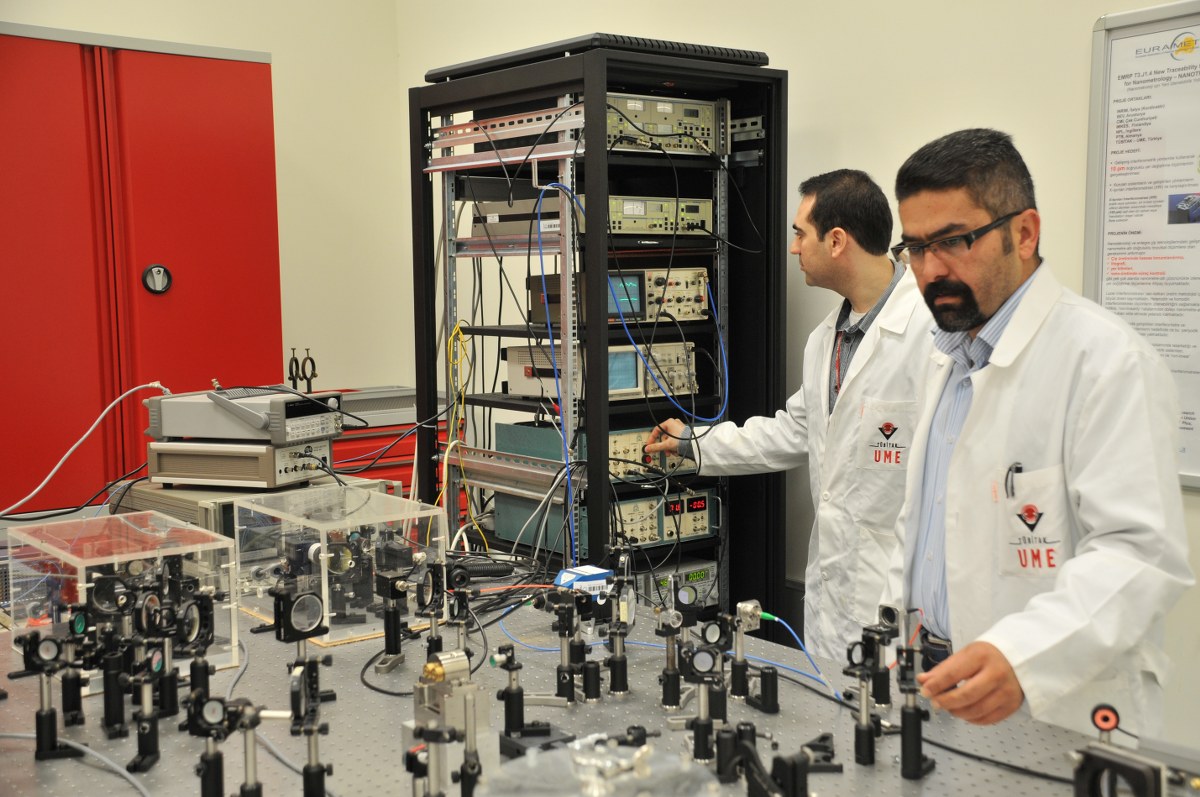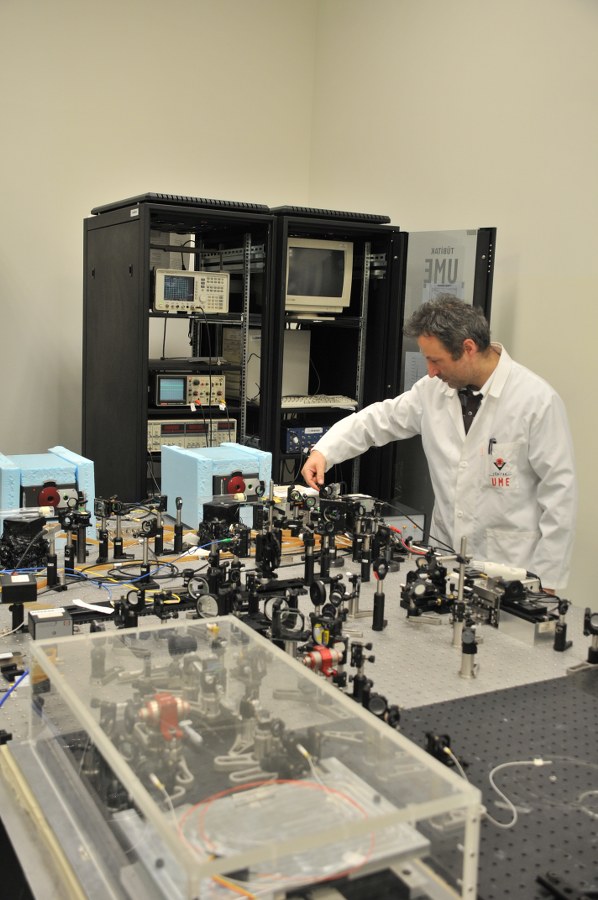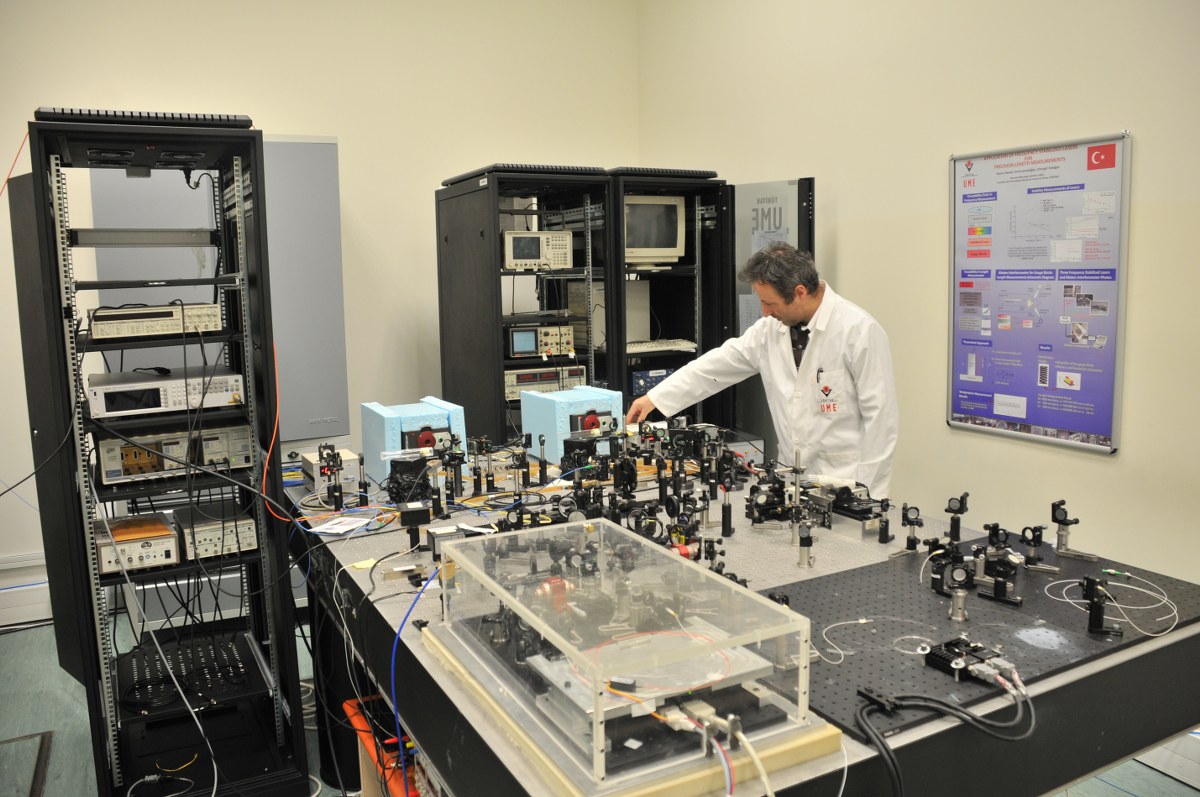

With the laser standards developed, more precise optical clocks can be made and length and displacement measurements can be made with nanometer and picometer uncertainty by laser interferometric methods. TÜBİTAK UME Time-Frequency and Wavelength Laboratories, which operate within this scope, consist of two sub-laboratories: Time-Frequency and Wavelength Laboratories.
The services and areas of work provided by the Time Frequency Laboratory can be summarized as follows.
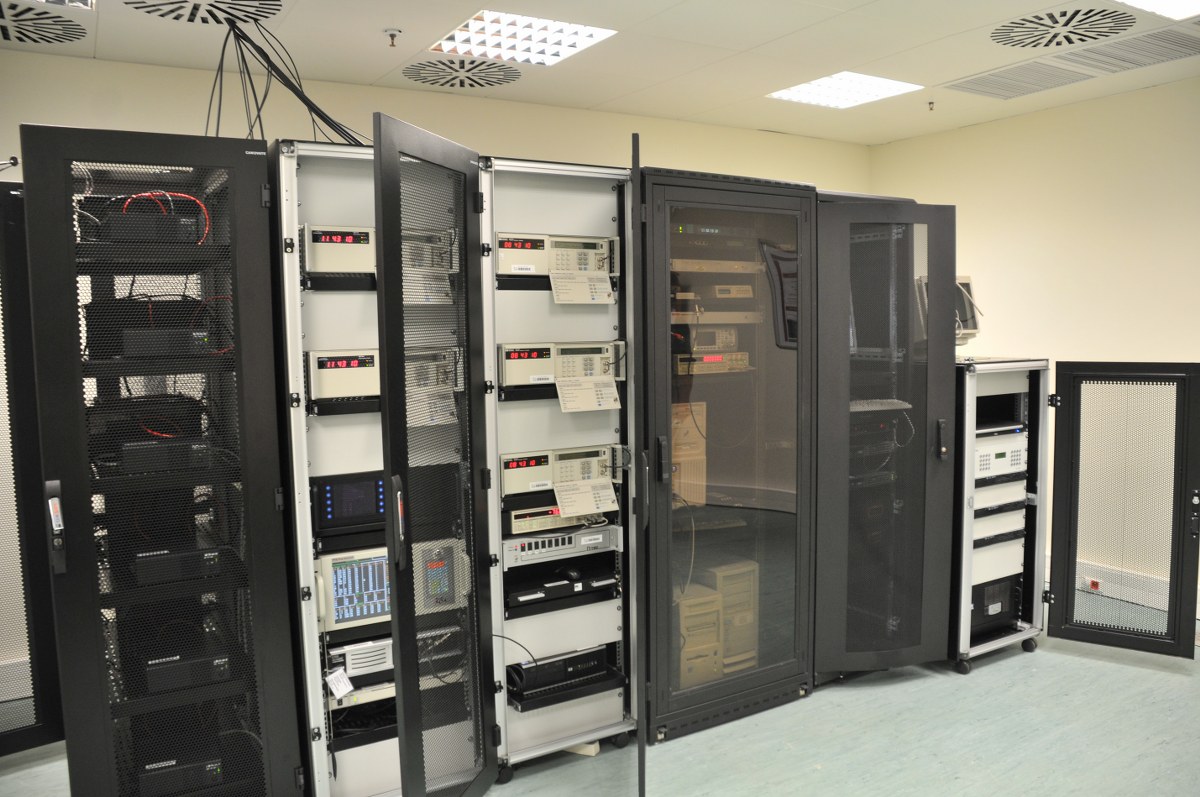
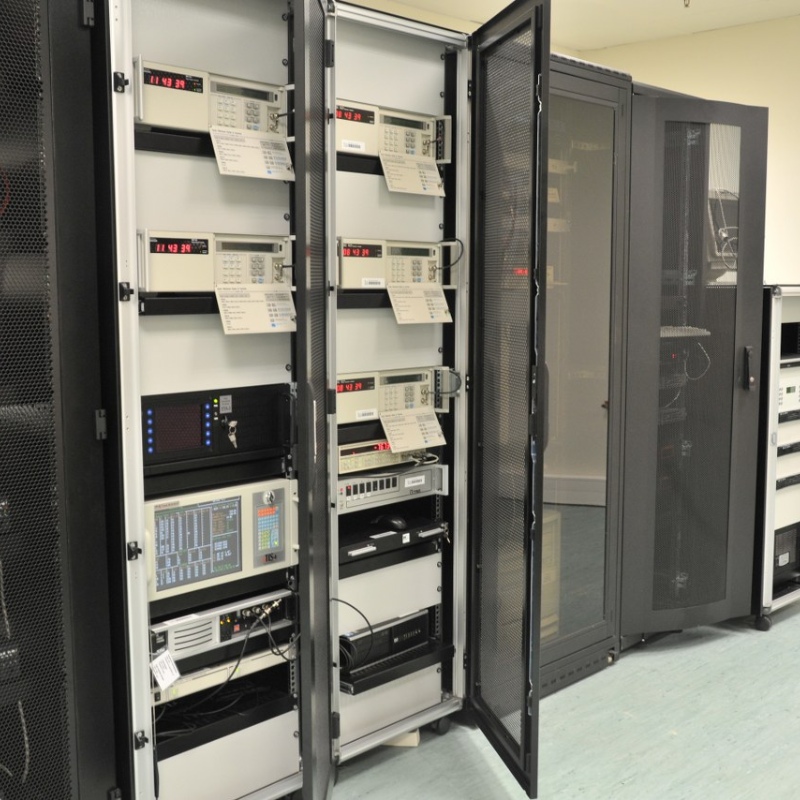
The Time-Frequency Laboratory has been a member of the Atomic Time International (TAI) Club since 1994 with its existing 1 Hydrogen Mazer (H-Maser), 5 Cs atomic clocks and 2 GPS satellite receivers, contributing to the creation of the Coordinated Universal Time (UTC) scale and ensuring its international traceability. Time scale 2×10-14 The 10 MHz signal of the atomic clock is used as a reference for both calibration services and laser absolute frequency measurements with the femtosecond frequency comb (COMB).
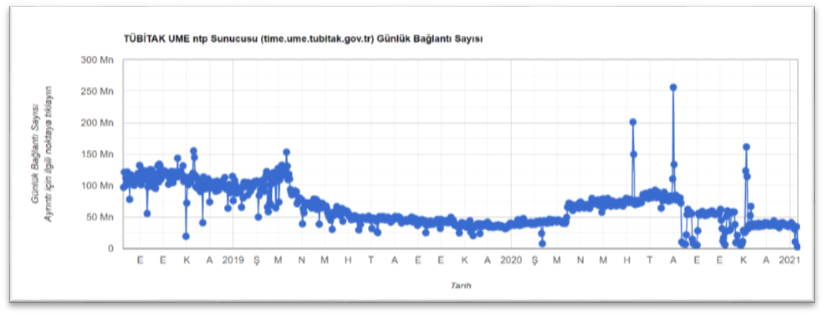
Internet technology, which serves in every field with the developing technology, has been used for time distribution for a very long time. Time synchronization is also very important in computer networks where many operations are performed over the internet. The protocol created to synchronize the time of all computers in the network by transferring time between computer systems is the Network Time Protocol (ntp) and is supported by all operating systems. Accurate time information obtained from the Cs atomic clock in the Time - Frequency laboratory is distributed free of charge using the ntp protocol using the internet line. Individuals or institutions that need accurate time information will be able to access the UTC (UME) clock, which is the National Time of our country, if they set their computers to receive time via ntp protocol at "time.ume.tubitak.gov.tr". The document on how to set the clocks of computers open for personal use can be accessed from the website of TÜBİTAK UME. This service, which is provided free of charge, is in high demand not only from Turkey but also from abroad. The graph of daily requests to the system is given below.
The services and areas of work provided by the Wavelength Laboratory are summarized below.
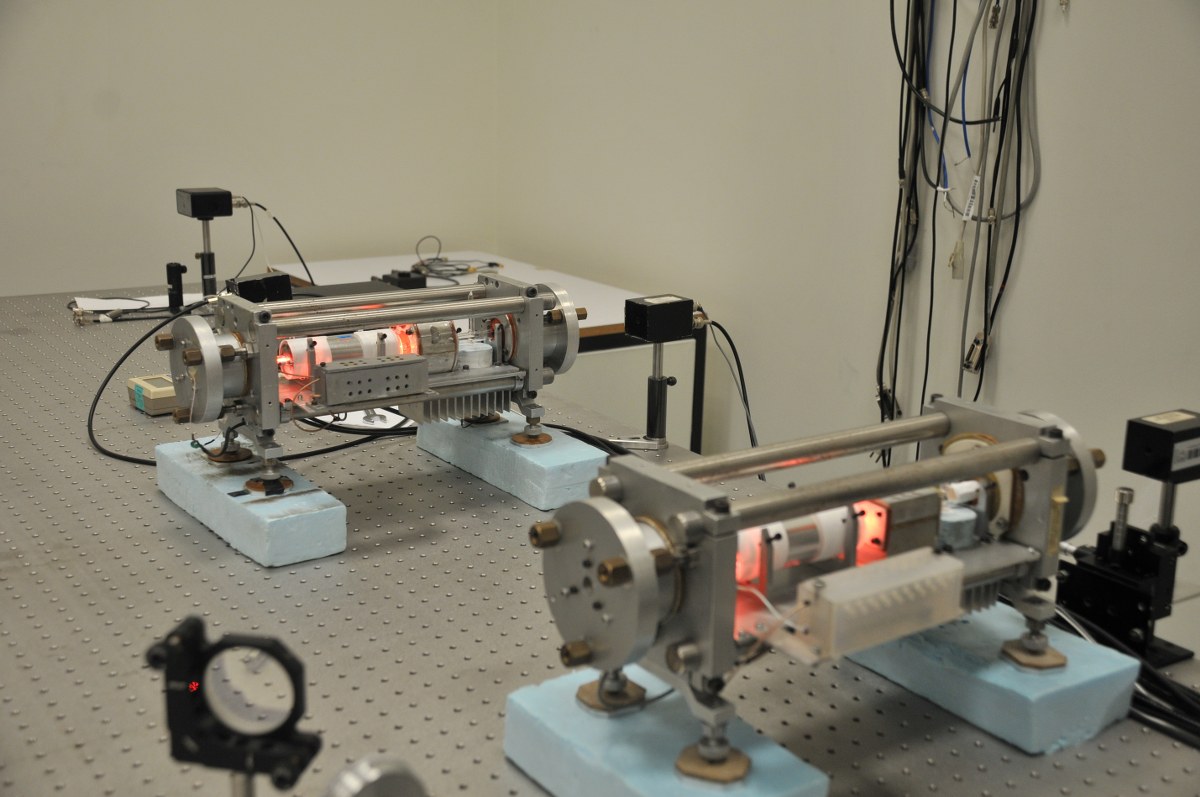
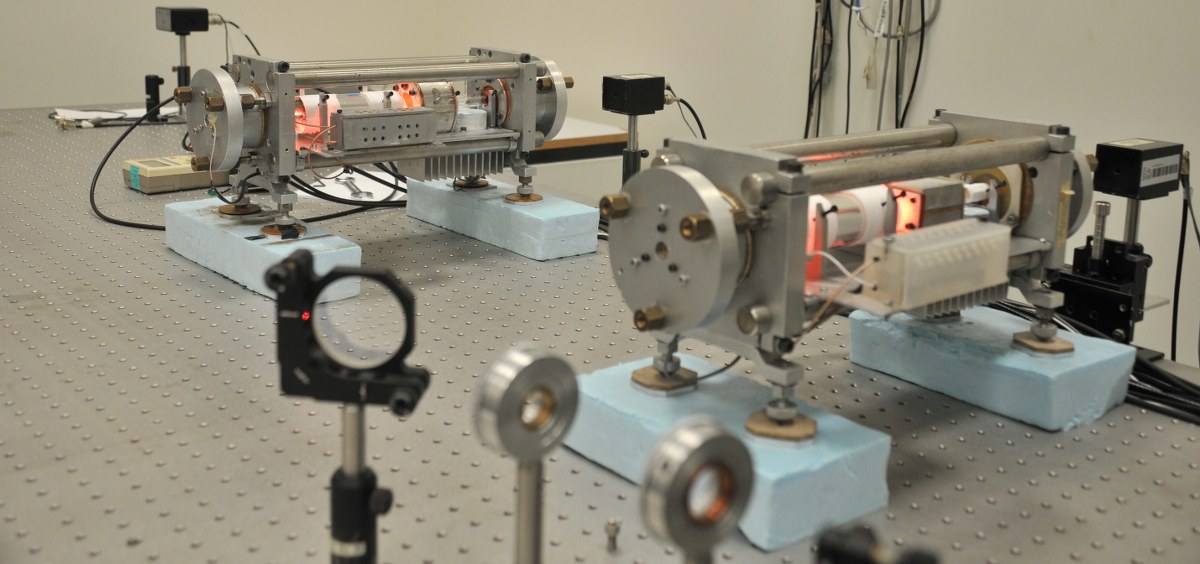
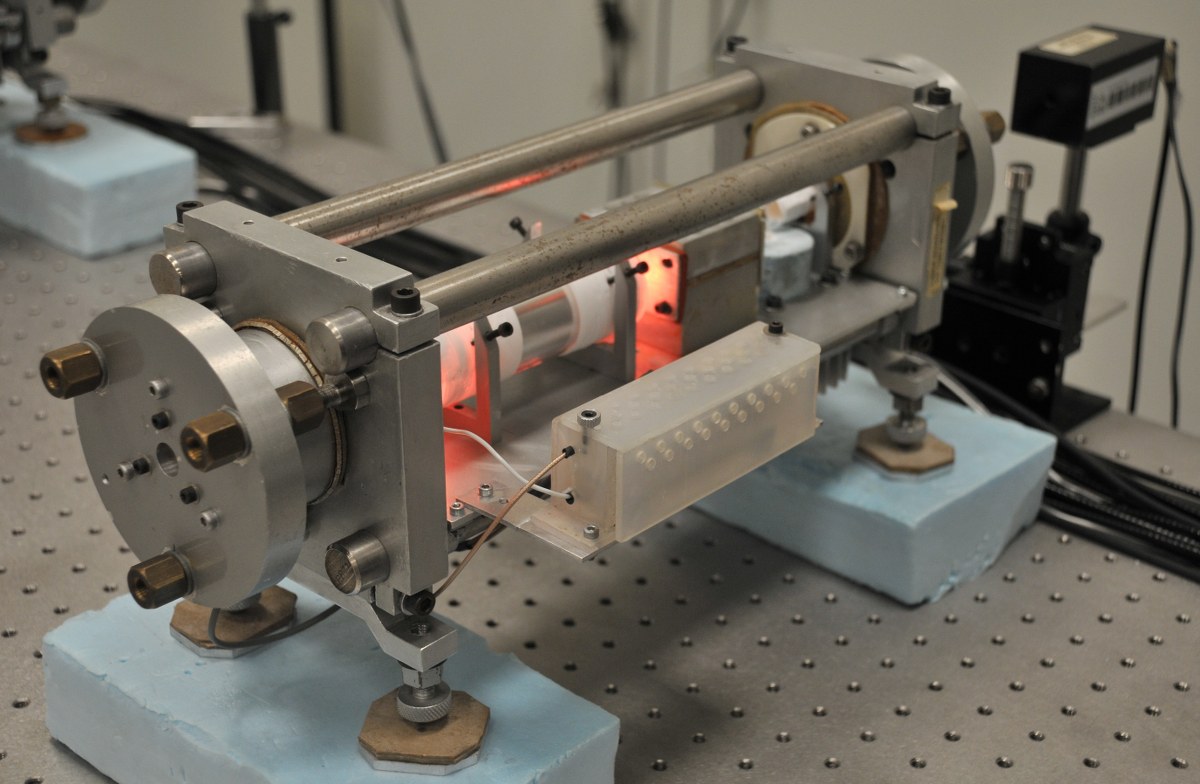
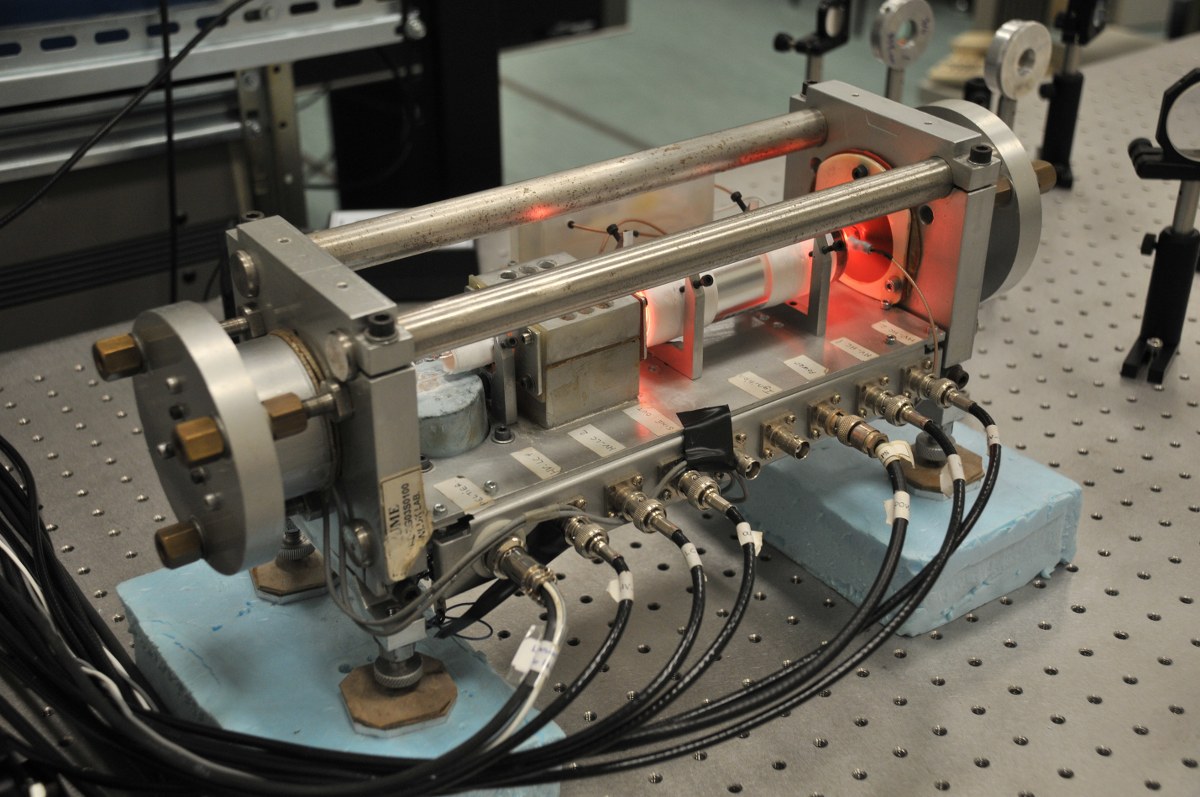
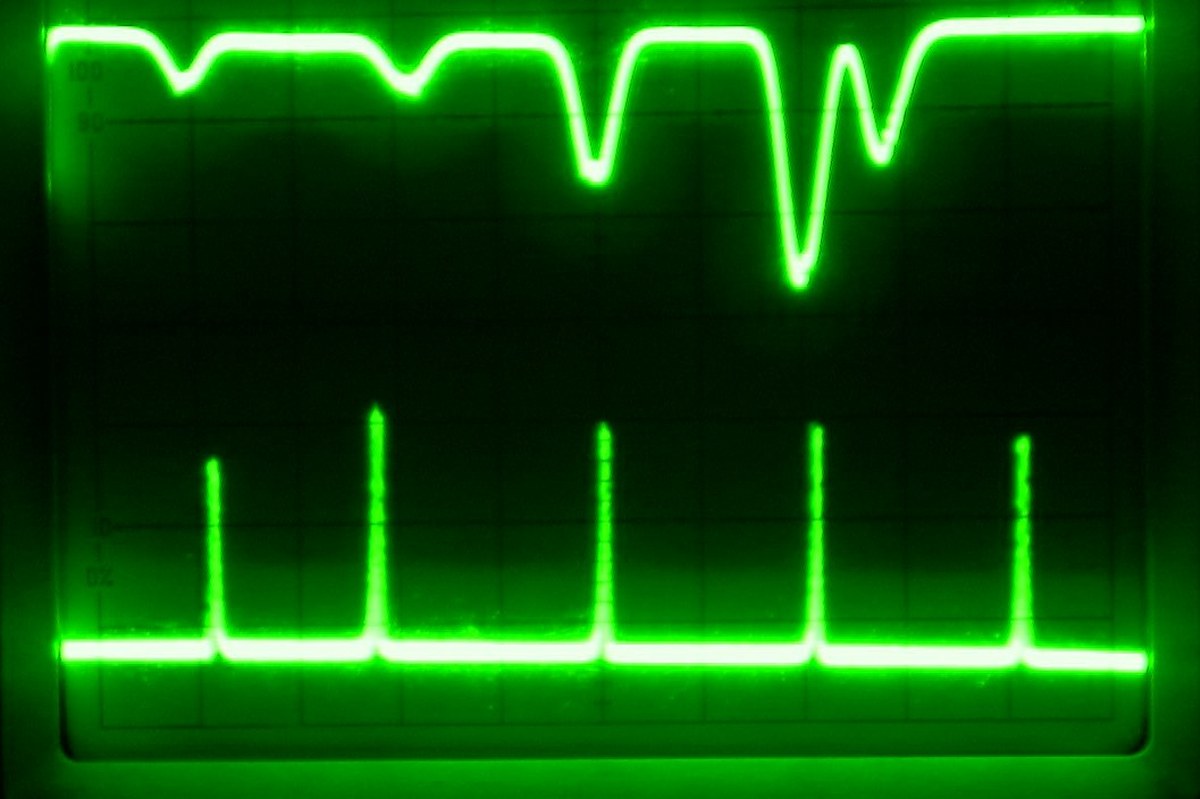
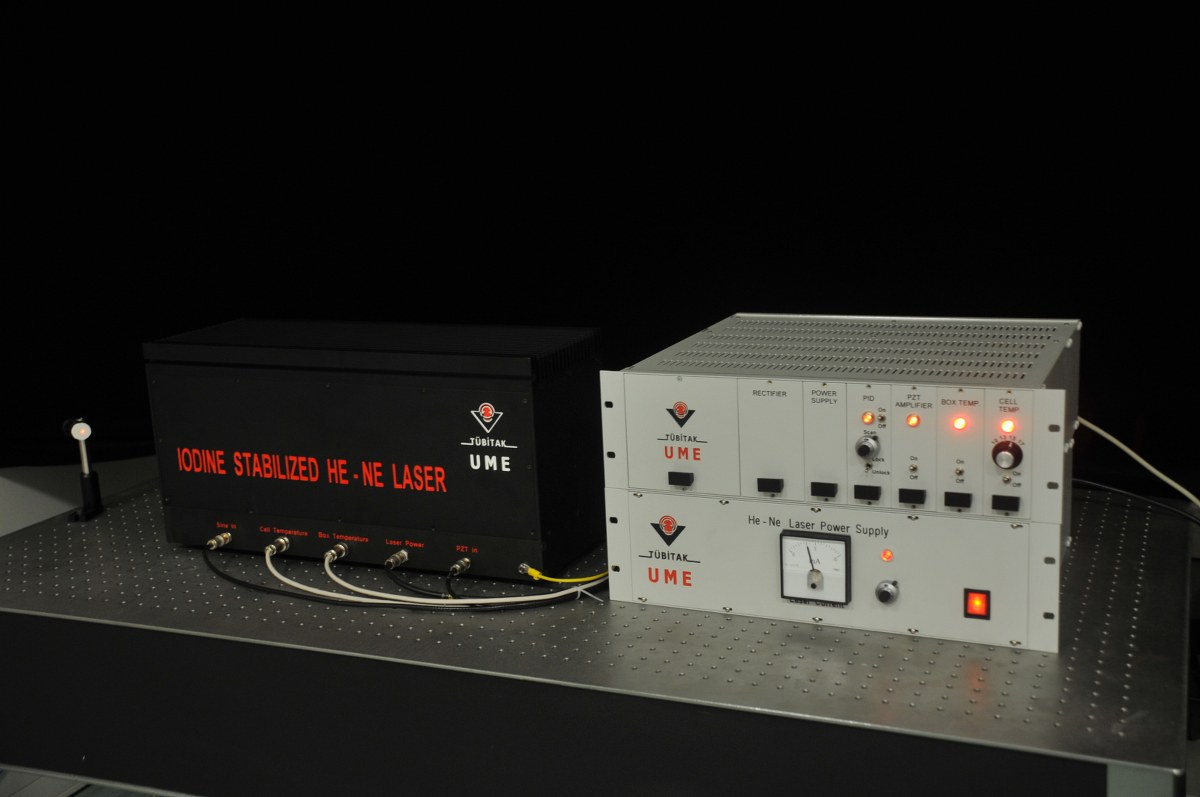
As a result of the studies carried out in the laboratory, lasers of different wavelengths were developed and their frequencies were locked to the energy transitions of Rb and Cs atoms, I2 and CH4 molecules with a stability of 1×10-11 - 1×10-14. The parameters affecting the frequency of He-Ne/I2 and He-Ne/CH4 gas lasers, Nd-YAG/I2 solid-state laser and ECDL/Rb, Cs semiconductor lasers were investigated and analyzed.
The absolute frequency of the He-Ne/I2 laser (633 nm) locked to the f line of iodine molecules was measured and compared with both BIPM (473 612 353 602.0 ± 1.1) kHz and UME (473 612 353 600.6 ± 1.1) kHz Ti:Sa COMB system. The absolute (88 376 181 000 253 ± 23) Hz frequency of the He-Ne/CH4 laser (3390 nm) was measured in the PTB frequency chain.
The developed ECDL lasers are locked onto the D2 transitions of Cs (852 nm) and Rb (780 nm) atoms and the 2-photon S-D transition of Rb atoms (778 nm).
As a result of the studies carried out in the laboratory, the use of frequency-scanable lasers has shown that Cs atoms can be used in D2 selective reflection, wave mixing, laser pressure on resonances, optical pumping at the Zeeman level and coherent optical trapping are investigated. Microwave-atom-laser interaction in free space conditions is studied and radio-optical coherent resonances are observed. Nonlinear resonances based on polarization and Faraday factors in the S-D 2-photon energy transition of Rb atoms are analyzed. I2 and CH4 The effects of radiation intensity and gas pressure on absorption resonances in molecules were measured.
As a result of the studies, the repetition and offset frequency of the femtosecond Ti:Sa optical frequency comb operating in the 530 nm - 1100 nm range was locked to the 10 MHz reference signal of the Cs atomic clock and the He-Ne/I2, Nd-YAG/I2 and absolute frequencies of ECDL/Rb, Cs lasers were measured. In the laboratory, a Yb fiber laser-based laser optical frequency comb operating in the 600 nm - 1600 nm wavelength range and capable of generating 33 fs pulses was developed and the repetition and offset frequency of this system was locked to the 10 MHz signal of the Cs atomic clock. The Yb-fiber optical frequency comb is also used to measure the absolute frequency of He-Ne and Nd-YAG/I2 lasers.
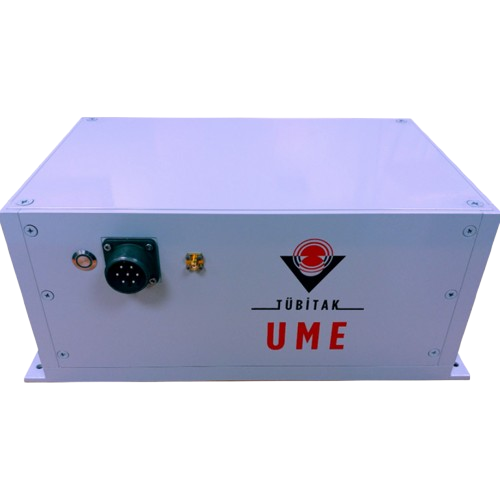
TÜBİTAK UME has initiated the Strontium-based optical atomic clock project, which has a very important value for our country's domestic and national positioning system.
Optical atomic clocks, the state-of-the-art technology in time measurement, have the potential to produce time information at least one hundred times more accurate than existing atomic clocks. The Sr optical-lattice atomic clock to be developed by TÜBİTAK UME is expected to measure with a deviation of less than 1 second in 1 billion years. By using the time information of ground stations equipped with such clocks for national positioning systems, the national positioning system will be able to obtain much more precise position information.
In 2026, the CGPM (General Conference on Weights and Measures) is expected to replace the definition of the time unit second with a new definition based on optical frequency standards, which is one hundred times better than the accuracy of current atomic clocks. The Strontium-based optical atomic clock to be developed by TÜBİTAK UME is also aimed to be used in the redefinition of the time unit of our country.
With the optical atomic clocks to be developed, the current accuracy of our country's national time scale will be increased by more than a hundred times. It is foreseen that the use of optical clocks will pioneer innovations in many fields such as positioning (navigation), fast communication, electronic signature, new generation radar systems, relativistic geodesy, quantum computing and many similar fields, especially the redefinition of the second and basic physical constants.
Within the scope of the High Power Laser System Development project, a laser system with a total power of 20 kW was developed by combining 4 directed lasers with a power of 5 kW. The project partners are TÜBİTAK BİLGEM, ASELSAN, TÜBİTAK MAM, Bilkent University and TÜBİTAK UME.
Within the scope of the project, UME's task is high power laser characterization. Laser characterization is one of the most important topics in the metals and medical sectors and measurement accuracy is of great importance for the reliable use of the system and in the laser design phase. In this context, laser M2 factor measurement and power measurement systems will be installed in accordance with international standards and support will be provided to other project partners for on-site measurement services and the establishment of a standard measurement setup for characterization.
Laser characterization is one of the most important issues in the metal industry and in the medical sector, and measurement accuracy is crucial for the reliable use of the system and in the laser design phase.
"1 meter is the length of the distance that light travels in a vacuum in a time interval of 1/299 792 458 seconds" (1983).
'Meter' can be defined in terms of the speed of light and this definition is used today. Here, the speed of light is accepted as a universal constant and distance and length measurements are made in terms of known and accepted wavelengths of light.
In parallel with the definition of the meter, interferometer systems are used to transfer the length unit meter from stable lasers used as the frequency standard (wavelength standard) to gauge blocks used as the transfer standard. Two types of interferometer systems are used for this purpose;
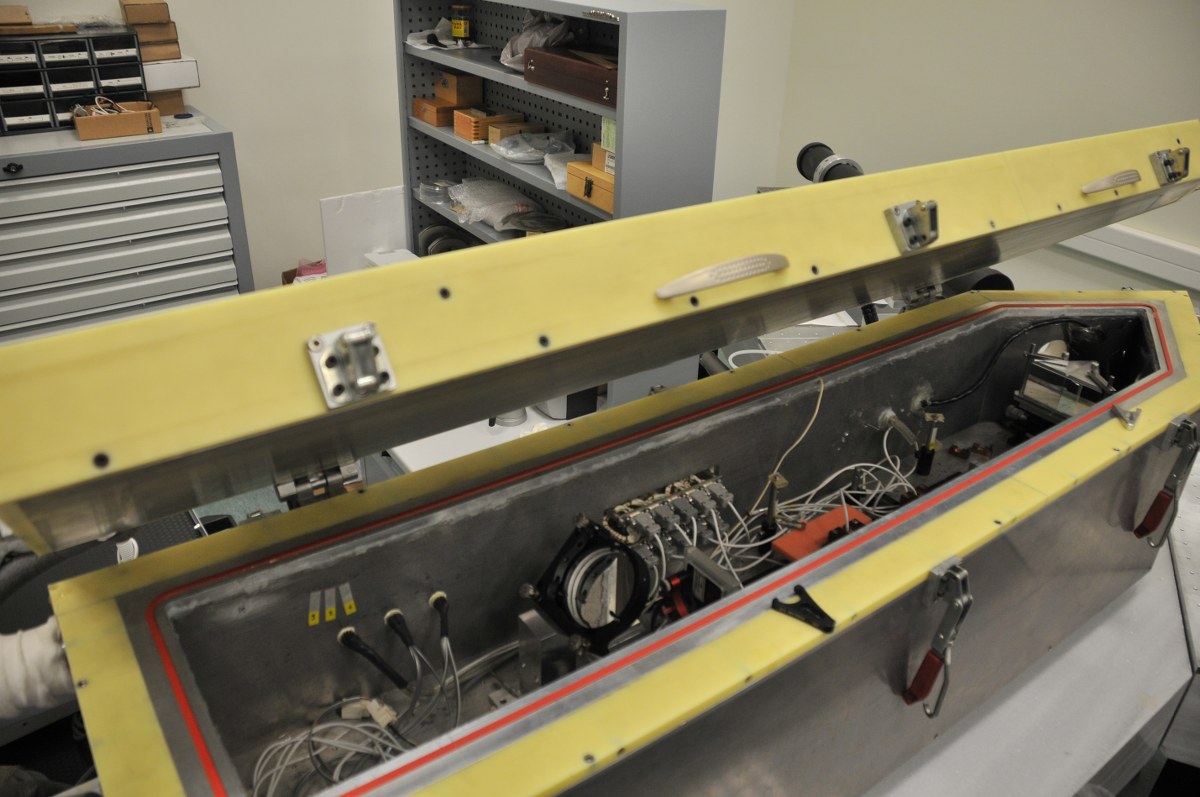
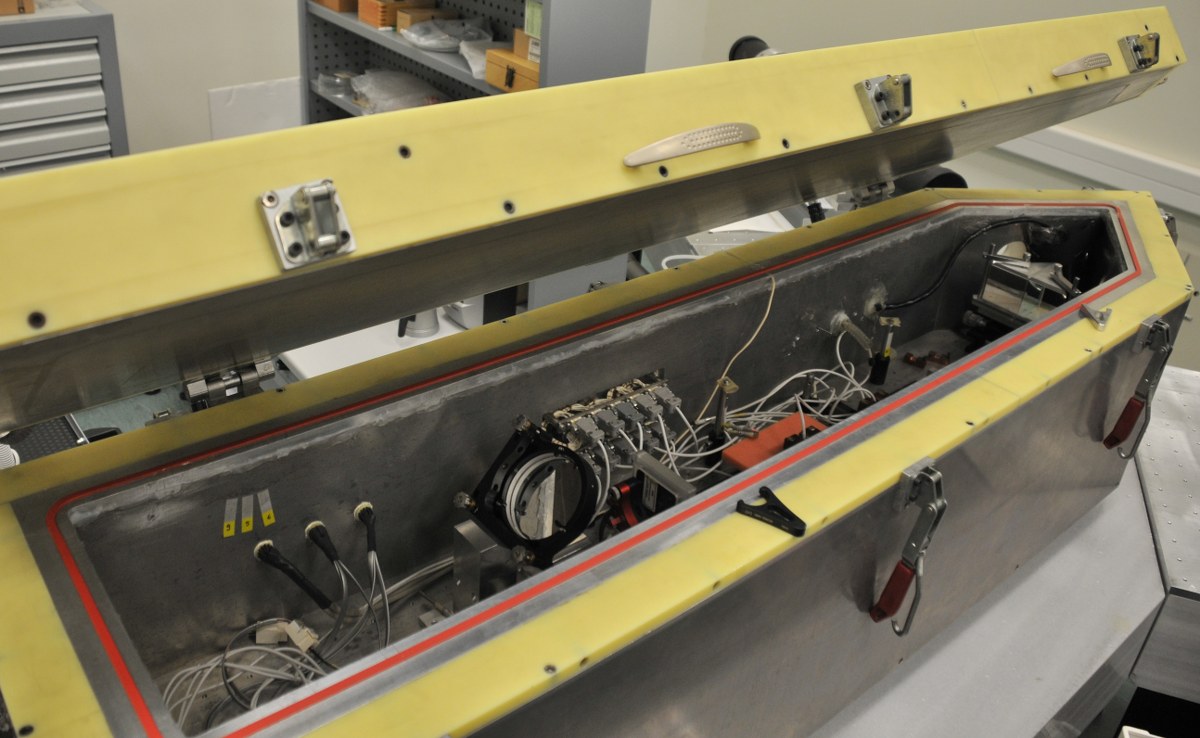
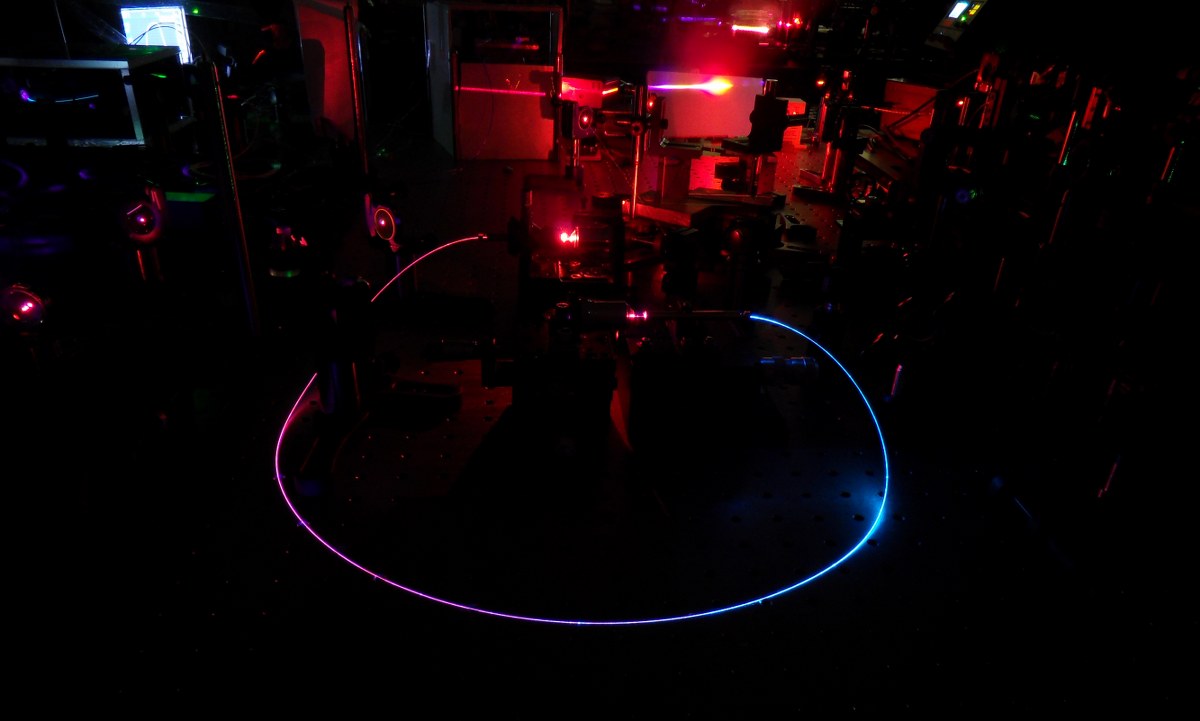
Köster Interferometer measures the lengths of long gauge blocks by 10-9 meter precision. In this interferometer, stable laser beams of different wavelengths are sent through fiber cables to the interferometer containing the gauge block. The interference patterns formed at the output of the interferometer are analyzed by a computer-controlled CCD camera and the length value of the gauge block is obtained. In our laboratory, the lengths of gauge blocks in the range of 125-1000 mm are measured with the Köster Interferometer. 1 m long gauge blocks are measured with an uncertainty of 200 nm.
Lasers used in Gauge Block Interferometers are frequency stabilized lasers. The National Metrology Institute (UME) has designed and manufactured the mechanical and electronic systems required to stabilize the lasers and frequency. The Stable Lasers produced in this context and brought to commercial format over time with continuous improvements are as follows; 1) He-Ne Laser with locking system for iodine energy transitions (He-Ne/I2), 2) Nd:YAG Lasers (Nd:YAG/I2) (The stability system of the Nd:YAG laser was made at UME) 3) External Cavity Diode Lasers (ECDL/Cs or ECDL/Rb) with locking system for energy transitions of Cs or Rb atoms.
UME has designed and manufactured the Köster Long Gauge Block Interferometer, which measures the lengths of Long Gauge Blocks at the primary level. Thus, by contributing to research and development in this field, UME aims to have the necessary infrastructure and know-how. In addition, UME Köster Long Gauge Block Interferometer meets the interferometric long gauge block calibration demands from different sectors across the country and aims to fill the gap in this field.
The aim of this project is to design and install a primary level measurement system "Short Gauge Block Interferometer". In the interferometric measurement method, short gauge blocks (0.3-300 mm), 10-9 can be measured with a precision on the order of nanometers.
A "Short Gauge Block Interferometer", in which the previous experience, knowledge and expertise of the UME Wavelength Laboratory staff can be transferred, has been produced in-house and turned into a commercial system.
The aim of this project is to realize the design and installation of a secondary level measurement system "Long Gauge Block Comparator";
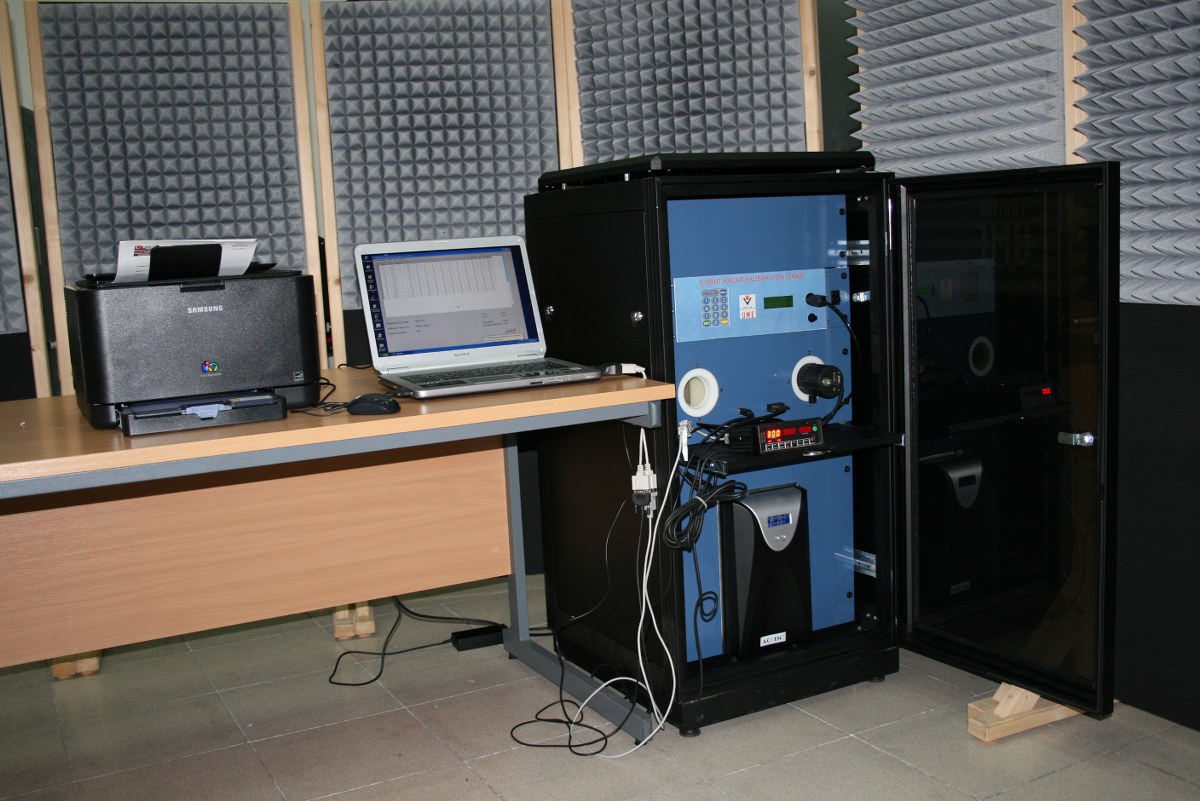
In this system, where the principle of comparison with a reference block is applied, the lengths of rectangular and square section gauge blocks in the range of 125-1000 mm can be measured. With the completion of the production of the comparator at UME, it can be turned into a commercial product and used both by some organizations and Secondary Level Laboratories within the borders of the country and in some countries where metrology infrastructure is developing.
| Temperature (Wavelength Laboratory) | 20,0 ° C | ± 2,0 |
| Temperature (Time Frequency Laboratory) | 23,0 ° C | ± 2,0 |
| Relative Humidity | % 45,0 | ± 15,0 |
Email: ume@tubitak.gov.tr
Phone: 0 (262) 679 5000