
UME

Optics Laboratory

About Us

The purpose of TÜBİTAK UME Optics Laboratory is to establish primary level measurement systems in optics, to create reference standards traceable to the International System of Units (SI), to ensure the integration of the standards created into the international system through comparisons, and to control the measurements within the country with calibration and test services.

In this context, the Optics Laboratory provides calibration, experimentation, training and consultancy services in the fields of Radiometry, Photometry, Spectrophotometry, Fiber Optics and Photovoltaics. In addition, it offers its knowledge and technology infrastructure in optical measurements to the service of the country's industry through many cooperation programs developed. In parallel with technological developments, it carries out domestic and international R&D studies to meet the potential measurement demands that may arise in the country and continuously improves and renews its systems.

monochromator

Fields of Activity

TÜBİTAK UME Optics Laboratory carries out its activities in five sub-sections in the field of scientific metrology. These sections are named as Radiometry, Photometry, Spectrophotometry, Fiber Optics and Photovoltaics. The activities carried out in these departments are given below.

Radiometry Division: Work is conducted on light sources emitting in the ultraviolet (UV), visible (VIS), and infrared (IR) regions of the electromagnetic spectrum, known as the optical region, as well as on detectors used for measurements in these regions. Research on light sources includes their spectral irradiance, radiance levels, and optical power levels; detector-related studies cover internal and external quantum efficiencies, spectral responsivities, dynamic ranges, and surface uniformities. Traceability of all these measurements is provided through the cryogenic radiometer system, which serves as the primary standard measurement system in radiometry.

cryogenic radiometer img

Spectrophotometry Division: Measurements of materials' specular/diffuse transmittance, specular/diffuse reflectance, absorption, color, and brightness are conducted in the optical region of the electromagnetic spectrum (wavelength range 250 nm - 2500 nm). Characterization, testing, and calibration of measurement devices are also performed. Traceability of measurements in this division is provided by a robot-based absolute reflectance measurement system capable of determining the bidirectional reflectance distribution function (BRDF) of materials, serving as the primary standard in spectrophotometric measurements.

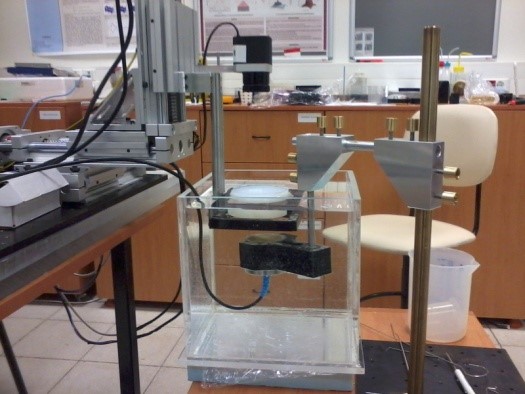
spectrometer img

Fiber Optic Division: Measurements of power, loss, and length of single-mode fiber optic cables at telecommunication wavelengths (1310 nm and 1550 nm) are conducted, along with calibration services of measurement devices and references that have primary-level metrological traceability. Traceability of reference standards used in this division is provided via the primary-level cryogenic radiometer system in the radiometry division and the primary-level cesium atomic clock at TÜBİTAK UME Time and Frequency Laboratory.

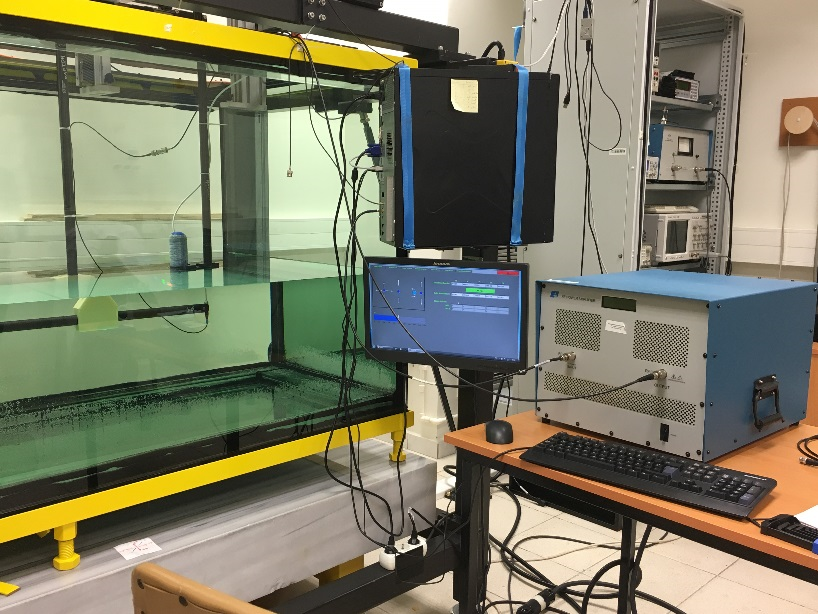
fiber optic measurement system img

Photometry Division: Characterization, testing, and calibration of light sources and measuring instruments in the visible region (VIS, wavelength range 380 nm - 780 nm) of the electromagnetic spectrum are performed. Traceability of the reference standards used in this division is ensured via the primary-level cryogenic radiometer system in the radiometry unit and is linked to the internationally recognized base unit of luminous intensity, the candela (cd).

Photovoltaic R&D, calibration and testing services for the measurements of Photovoltaic (PV) panels and cells are carried out within the scope specified below, and certification services are provided in accordance with TS/EN/ISO 17025 standard as accredited by TÜRKAK.

  • Within the scope of R&D activities, research activities are carried out to create reference standards for PV measurements, establish reference measurement systems, improve and increase the capacity of measurement systems. In addition, national and international project studies are carried out to meet the needs of the national industry and to increase the impact of TÜBİTAK UME in international projects.
  • Within the scope of calibration services, classification measurements and calibrations of solar energy simulator systems of PV manufacturers in accordance with IEC 60904-9 standard are carried out with portable reference measurement systems established at TÜBİTAK UME. In addition, calibrations of payranometers used in solar power plants to determine the level of radiation falling on PV panels are carried out.
  • Within the scope of testing services, performance and safety measurements are carried out according to IEC 61215-2 and IEC 61730-2 standards with measurement systems that can simulate outdoor conditions such as rain, wind, hail, snow, light and temperature changes that single and bidirectional PV panels may encounter in the field.

Services Provided

Services provided by TÜBİTAK UME Optics Laboratory in the fields of Radiometry, Photometry, Spectrophotometry, Fiber Optics and Photovoltaics:

Calibration Services Provided in Spectrophotometry Division

  • Spectrophotometer (UV/VIS) Calibrations
  • Wavelength Measurements of Light Sources
  • Spectral Uniform Transmittance Measurements (250 nm - 2500 nm)
  • Total Transmittance Measurements (250 nm- 2500 nm)
  • Spectral Uniform Reflectance Measurements (250 nm- 2500 nm)
  • Spectral Diffuse Reflectance Measurements (250 nm- 2500 nm)
  • Color Plate Measurements (CIEXYZ, CIExy, CIELAB, ΔE) (standard measurement conditions: d:8°, d:0° and 0°:45° and standard observation conditions: 2° and 10°)
  • Colorimeter Measurements (DE) (standard measuring conditions: 0°:45° and d:8°)
  • Gloss Measurements (Gloss Plate) (Standard angles: 20°, 60° and 85°)

Calibration Services Provided in Photometry Division

  • Luminous Flux Measurements (lm)
  • Light Intensity Measurements (cd)
  • Measurements of Color Coordinates of Light Sources (CIE-xy, CIE-u'v')
  • Color Temperature Measurements of Light Sources (K)
  • Glare Sensitivity Measurements (cd/m2)
  • Luminance Measurements (cd/m2)
  • Illuminance Level Measurements (Lux meter) (lx)
  • Photosensitivity Measurements (Photometer Head) (A/lx)
  • Luminous Effect Measurements (Flash Source, lx∙s)

Calibration Services Provided in Detector Radiometry Unit

  • Spectral Radiation Level Measurements of Sources (W/(m2nm))
  • Spectral Radiation Level Sensitivity Measurements of Detectors (A/(W/(m2nm)))))
  • Spectral Radiation Measurements of Sources (W/(sr.m2nm))
  • Spectral Radiosensitivity Measurements of Sources (A/(W/(sr.m2nm)))))
  • Spectral Sensitivity Factor Measurements of Laser Optical Power and Energy Meters
  • Spectral Optical Power Sensitivity Measurements of Detectors (A/(Wnm))

Calibration / Test Services Provided in Photovoltaic Unit

    • Visual Inspection Test
    • Maximum Power Experiment
    • Insulation Resistance Test
    • Temperature Coefficients Experiment
    • Nominal Module Operating Temperature (NMOT) Test
    • Standard Test Condition (STC) and Nominal Modulus Operating Temperature (NMOT) Performance Test
    • Low Irradiance Performance Test
    • Outdoor Exposure Test
    • Hot-Point Strength Test
    • UV Preconditioning Experiment
    • Thermal Cycle Test
    • Moisture-Frosting Experiment
    • Temperature-Humidity Experiment
    • Robustness of Terminations Experiment
    • Wet Leakage Current Experiment
    • Mechanical Loading Test
    • Hail Experiment
    • Bridging Diode Thermal Test
    • Bridging Diode Functionality Test
    • Stability Experiment
    • Accessibility Experiment
    • Shear Sensitivity Experiment
    • Grounding Continuity Experiment
    • Pulse Voltage Test
    • Temperature Experiment
    • Combustion Experiment
    • Reverse Overcurrent Experiment
    • Module Crushing Test
    • Material Deformation Test
    • UV Experiment
    • Cold Conditioning Experiment
    • Hot Conditioning Experiment
    • Spectral Sensitivity Experiment
    • Light Induced Distortion (LID) Experiment
    • Voltage Induced Distortion (PID) Experiments
    • Energy Rating Experiment
    • Reference Panel Calibration
    • Reference Cell Calibration

Calibration Services Provided in Fiber Optic Labarotary

    • Fiber Optic Power Meter Measurements (Power Meter), (1310 nm, 1550 nm)
    • Fiber Optic Attenuator Measurements (Attenuator), (1310 nm, 1550 nm)
    • Distance and Attenuation Measurements of OTDR Devices (1310 nm, 1550 nm)

Service Request

.cls-1 { fill-rule: evenodd; stroke-width: 0px; }

Calibration / Testing Services

.cls-1 { fill-rule: evenodd; stroke-width: 0px; }

Training Services

.cls-1 { fill-rule: evenodd; stroke-width: 0px; }

Device Manufacturing Services

.cls-1 { fill-rule: evenodd; stroke-width: 0px; }

Consulting Services

Technical Hardware and Equipment

Calibration and Test Systems in Photovoltaic Optics Department

    • Solar Simulator System (Measurements of Solar Panels)
    • Solar Simulator System (Measurements of Solar Cells)
    • Solar Simulator Classification Measurement System
    • Solar Panel Stabilization System
    • Ultraviolet (UV) Pre-treatment System
    • Outdoor Exposure System
    • Electroluminescence Measurement System
    • Air Conditioning System
    • Wet Leakage System
    • Hail Launch System
    • Dynamic/Static Mechanical Load System
    • Robustness of Terminations System
    • Burn-in Test System
    • Module Crushing System
    • Cut Sensitivity System
    • Earthing Measurement System
    • Insulation Measurement System

Calibration and Test Systems in Fiber Optics Department

    • Power Measurement System
    • Length and Attenuation Measurement System

Calibration and Experimental Systems in Spectrophotometry Department

    • BRDF/Absolute Reflectance Measurement System
    • Spectral Uniform/Diffuse Reflectance Measurement System
    • Spectral Uniform/Dispersed Transmittance Measurement System
    • Color Measurement System
    • Brightness Measurement System
    • Wavelength Measurement System

Calibration and Experimental Systems in Photometry Department

    • Light Intensity Measurement System
    • Luminous Flux Measurement System
    • Color Coordinates Measurement System
    • LED Near Field Measurement System
    • LED Luminous Flux Measurement System
    • Luminance Measurement System
    • Glare Measurement System

Calibration and Test Systems in Radiometry Department

    • Absolute Power Measurement System
    • Spectral Sensitivity Measurement System
    • Laser Power Measurement System
    • Laser Energy Measurement System
    • Indoor Radiation Level Measurement System
    • Outdoor Radiation Level Measurement System
    • UV C Tightness Measurement System

PHYSICS GROUP

Projects and Collaborations

International Projects:

    • 23IND14 xDDiff, MultiDimensional Optical Diffusion for the Measurement of Appearance
    • 23RPT02 ETraceAbs, Establishing European Traceability for Medical Measuring Devices Through Optical Absorbance Liquid Filters
    • 22NRM05 MeLiDos, Metrology for Wearable Light Loggers and UV Radiation Dosimeters
    • 22IEM06 S-CALe Up, Self-calibrating photodiodes for UV and exploitation of induced junction technology
    • 22IEM05 NEWSTAND, New calibration standards and methods for radiometry and photometry after phase out of incandescent lamps
    • 21GRD03 PaRaMetriC, Metrological framework for passive radiative cooling Technologies
    • 20SCP01 Smart PhoRa, Smart specialization and stakeholder linkage in Photometry and Radiometry
    • 19NRM02 RevStdLED,Revision and extension of standards for test methods for LED lamps, luminaires and modules
    • 19ENG01 Metro PV, Metrology for Emerging PV Applications
    • 18SIB10 chipS-CALe, Self-calibrating photodiodes for the radiometric linkage to fundamental constants
    • 16ENG02 PV-Enerate, Advanced PV Energy Rating: Higher Precision and New Technologies
    • ENG51SolCell, Metrology for III-V materials based high efficiency multi-junction solar cells
    • ENG62MESaIL, Metrology for efficient and safe innovative lighting

Collaborations:

    • International committees with which the Optics Laboratory cooperates
      • BIPM, Committee of Consultants on Photometry and Radiometry (CCPR)
      • EURAMET, Technical Committee for Photometry and Radiometry (TCPR)
      • COOMET, Technical Committee for Photometry and Radiometry (TC 1.7)
      • GULFMET, Technical Committee for Photometry and Radiometry (TCPR)
    • National and international standardization and accreditation bodies with which the Optical Laboratory cooperates
      • International Commission on Illumination (CIE)
      • International Electrotechnical Commission (IEC)
      • International Organization for Standardization (ISO)
      • American Society for Testing and Materials (ASTM)
      • Deutsches Institut für Normung (DIN)
      • Turkish Standards Institute (TSE)

PHYSICS GROUP

Accreditation and Certificates

Accreditation Certificate in Photovoltaics (AB-0092-T)

Validity Date: 09.04.2023

PHYSICS GROUP

Contact Us for Your Measurement Requests

For more informationContact Us

Email: ume@tubitak.gov.tr

Phone: 0 (262) 679 5000